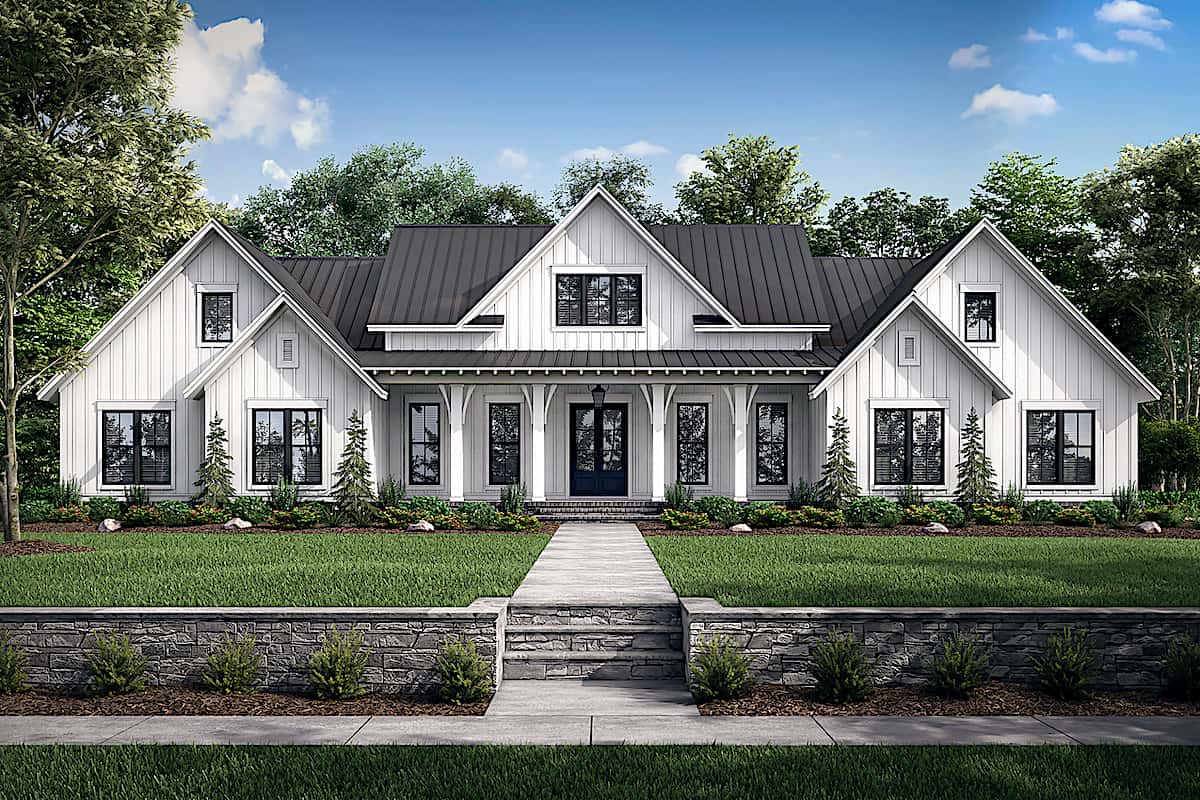
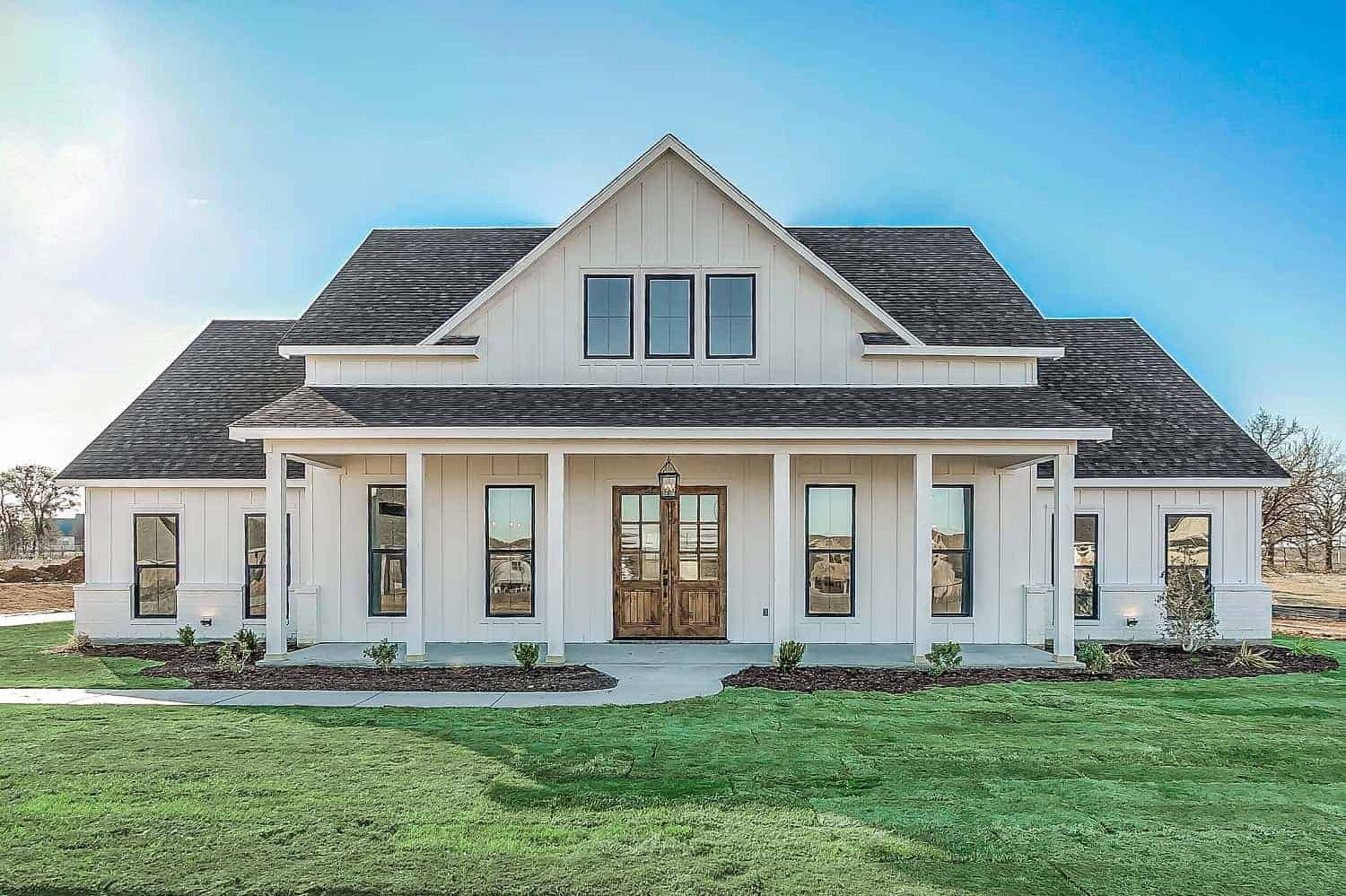
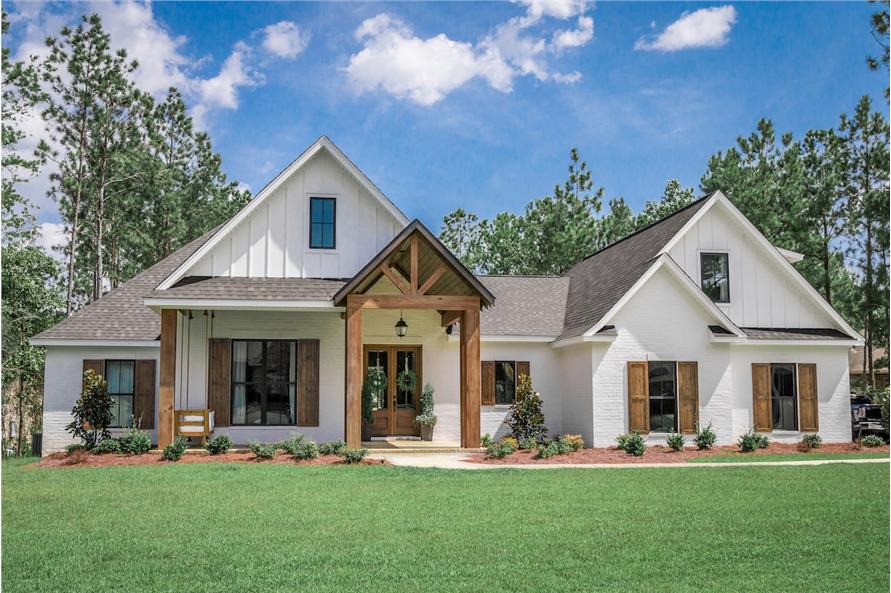
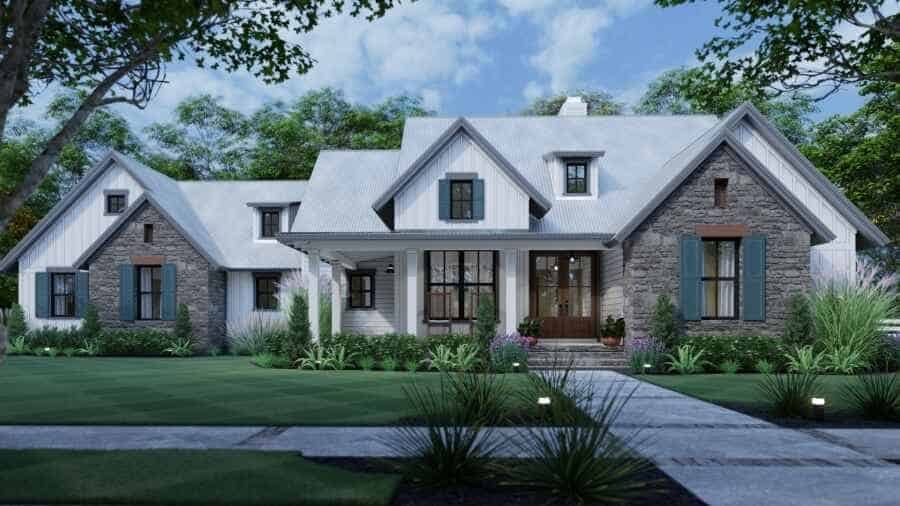
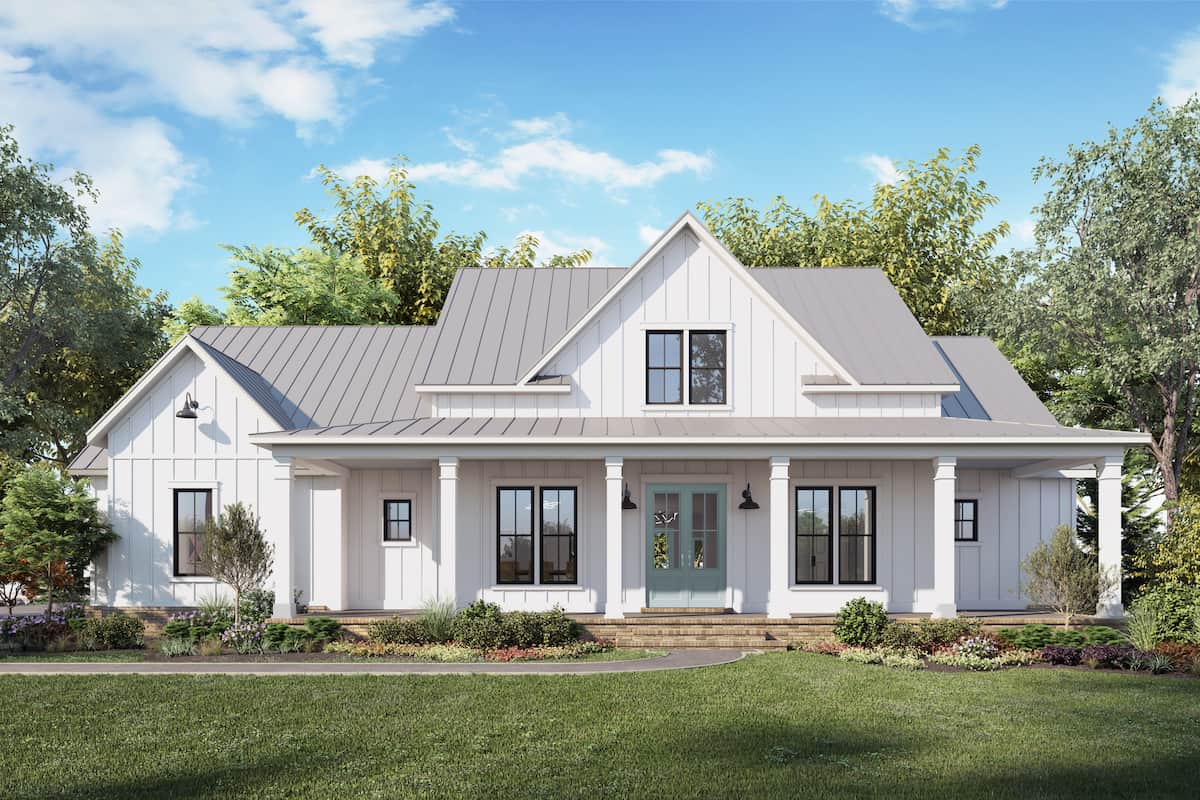
North Carolina house plans cover three distinct building environments: the mountain terrain of the western counties, the rolling Piedmont in the center of the state, and the flat coastal plain to the east.* Each region has different lot conditions, foundation requirements, and dominant architectural styles. The plans in this collection span all three, from Craftsman and Farmhouse designs common in the Piedmont and mountain counties to raised coastal cottages built for the Outer Banks and Brunswick County shoreline.
Colonial and Georgian plans remain common in older established neighborhoods — symmetrical facades, centered entries, and double-hung window groupings define both styles. Craftsman plans dominate newer suburban construction across the Piedmont. Front porches with tapered columns, low-pitched rooflines, and exposed rafter tails are the defining exterior elements. Farmhouse plans — both traditional and modern — appear throughout the rural Piedmont and mountain foothills, typically with metal roofing, board-and-batten or lap siding, and covered front or rear porches.
Along the coast, elevated construction on piling foundations is standard in flood-prone areas. These house designs are configured with the main living level 8 to 14 feet above grade, with space for cars or storage directly below. Exterior materials tend toward fiber cement siding. impact-rated windows, and breakaway walls at ground level to meet coastal exposure requirements.
Size ranges vary by region. Mountain and rural builds tend to run 1,500 to 2,800 square feet on larger lots. Piedmont suburban lots typically support plans from 1,800 to 3,200 square feet. Coastal builds are less predictable — a compact 3-bedroom cottage may come in under 1,400 square feet, while larger elevated homes exceed 3,000.
Architectural Styles Common to North Carolina Homes
Craftsman designs are among the most-searched styles for NC builds, particularly in the Charlotte metro, Raleigh-Durham area, and mountain communities like Asheville. The defining exterior elements are low-pitched gable rooflines and wide overhanging eaves. Front porches use square or tapered columns set on masonry piers.
Farmhouse floor plans suit the rural Piedmont and foothills well. Traditional farmhouse plans use covered wraparound porches, steep gable rooflines, and simple rectangular footprints. Modern farmhouse variants use board-and-batten siding and black window frames. Interior layouts typically open the kitchen, dining, and living areas under a vaulted ceiling. Metal building and barndominium-style plans are gaining ground on rural NC lots, particularly in the Piedmont and foothills where agricultural land and large parcels are common.
Southern-style homes suit the eastern counties and established neighborhoods across the state. These plans typically feature full-width front porches, brick or lap-siding exteriors, and formal entry arrangements. Coastal designs address Outer Banks, Crystal Coast, and Brunswick Islands builds — elevated floor levels, covered decks on multiple elevations, and rooflines designed for wind exposure.
Foundation and Construction Considerations for NC Builds
Crawl space foundations are the most common type of foundation in North Carolina. The humid climate and variable soil conditions across the Piedmont and mountain counties make crawl space construction practical for most sites. Vented crawl spaces are standard in older builds. Encapsulated crawl space systems are required or strongly recommended under current NC residential codes in most jurisdictions.
Slab foundations are more common in the Charlotte metro and lower Piedmont areas, where soil bearing capacity and lot drainage conditions support them. Full basement foundations are viable in the mountain counties where terrain creates natural grade separation — a walkout basement is achievable on many mountain lots that would require significant cut-and-fill on flat Piedmont sites.
In coastal flood zones, piling foundations are required under local and state building codes. FEMA designates high-risk flood areas as “AE zones” (areas with a 1% annual flood chance, where base flood elevations are established) and “VE zones" (coastal high-hazard areas subject to wave action in addition to flooding). It should be noted that many of our plans are not engineered for AE or VE flood zone loads and require modification before use on these coastal lots (please contact us for more information). Plans with basement options are available for mountain lot builds where the grade allows.
Lot and Terrain Considerations by Region
Mountain lots in the western counties — Buncombe, Henderson, Haywood, and surrounding areas — often feature steep grades, narrow road frontage, and irregular shapes. Plans with a narrow footprint or side-entry garage configuration work better on these sites than wide ranch-style layouts. Narrow lot plans are a useful filter for mountain builds where lot width constrains the floor plan.
Piedmont lots in the Charlotte and Raleigh-Durham metros tend to be regularized subdivision lots — typically 60 to 100 feet of frontage with standard setbacks. Ranch plans, two-story plans, and 1.5-story plans all work well here. Attached two- or three-car garages are standard, usually front-entry on flat lots.
Coastal lots vary. Oceanfront and soundfront lots are often narrow and deep, with strict setback requirements from the mean high-water mark. Elevated construction raises the finished floor 8 to 14 feet above grade. The roofline sits proportionally higher, which is a setback and height-limit consideration in many coastal jurisdictions. Homes with porches are well-suited to coastal builds where covered outdoor space is a primary design consideration.
Frequently Asked Questions
What architectural styles work best for North Carolina house plans?
Craftsman, Farmhouse, and Southern styles are the most common across the state. Craftsman plans suit mountain and Piedmont suburban lots. Farmhouse designs fit rural and foothills settings. Coastal cottage and elevated designs apply to oceanfront and soundfront lots. Southern-style, Colonial, and Georgian plans remain common in established neighborhoods across the state.
What foundation type is most common for North Carolina house plans?
It depends on the region within the state. The crawl space foundation is popular across the the Piedmont and in mountain counties. Slab is more prevalent in the Charlotte metro area, where soil conditions and lot drainage support it. Coastal flood zones typically require piling foundations. Mountain lots with significant grade change can support a walkout basement.
Do I need a North Carolina engineer stamp on a pre-drawn house plan?
Yes. Pre-drawn house plans are not pre-stamped for any specific state. North Carolina building departments require plans to be reviewed and stamped by a licensed NC engineer or architect before a building permit is issued.
Are there small North Carolina house plans under 1,500 square feet?
Yes. The collection includes plans ranging from under 1,000 to over 4,000 square feet. Filtering by square footage and bedroom count will narrow results to smaller layouts. Ranch plans and 3-bedroom one-story designs make up most of the catalog in the 1,200–1,500-square-foot range.
What features are common in North Carolina house plans with porches?
Front covered porches are standard on Craftsman, Farmhouse, and Southern plans. Coastal plans frequently include covered decks on the main living level and sometimes a ground-level entry porch at the piling level. Wraparound porches are a feature of traditional Farmhouse and Southern designs.
Can I find affordable North Carolina house plans for a modest budget?
Yes. Plans in the 1,200 to 1,800-square-foot range typically offer lower plan prices than larger designs. However, plan prices do vary by designer and package type. When selecting a plan package, look for the PDF plan set as these are typically the lowest-cost option. The affordable house plans collection can help identify lower-cost starting points.
Are North Carolina Craftsman house plans common in the mountains?
Craftsman plans are found in mountain communities, particularly around Asheville and the surrounding counties. The style's use of natural materials — wood columns, stone piers, and wood siding — fits well with mountain settings. Roof pitches on mountain Craftsman plans are steeper than those on Piedmont versions. Higher elevations in Buncombe and Haywood counties regularly see 10 to 30 inches of snowfall a year, and roof framing on mountain plans is typically sized for that load (be sure to check with your contractor and building department).
North Carolina covers a wider range of home site conditions and architectural traditions than most individual states do. The collection includes plans drawn for mountain terrain, Piedmont lots, and coastal flood zone sites. Use the filters to sort by foundation type, square footage, bedroom count, and architectural style to identify plans that fit the specific requirements of your site.
Disclosure (asterisk reference from intro)
* Please note: Plans in this collection are not designed specifically for North Carolina building code. Code compliance, engineering review, and any required local code adoptions are handled locally through a licensed professional. This collection may include plans from designers in the region, designs that have sold in North Carolina, or plans that reflect the architectural character of the area. Check with your contractor or local building department to confirm what is required for your site.